A brake problem often announces itself through one wheel before the dashboard says a word. A sticking brake caliper can make your SUV, sedan, or pickup feel like it is fighting itself, and the first clear answer is often hiding in uneven brake pad wear. One pad gets thin too soon. One wheel smells hot after a normal commute. One rotor looks darker than the others after a weekend of stop-and-go driving. For U.S. drivers dealing with road salt in Ohio, steep streets in Pittsburgh, desert heat in Arizona, or traffic in Dallas, this is more than a repair bill. It is a safety issue that can change how the car stops when you need it most. If you want plain-language auto ownership help beyond one repair visit, driver-focused maintenance insight can help you think through problems before they turn into guesses. The goal here is simple: spot the signs, understand the cause, and fix the right part instead of feeding new pads into the same old fault.
Sticking Brake Caliper Clues You Can Feel Before Pad Wear Gets Ugly
Most drivers notice the feel before they notice the parts. The car pulls. The wheel area smells burnt. Fuel use creeps up. A front wheel throws more dust than the other side. None of these clues proves the case alone, but together they draw a sharp line toward brake drag.
Heat at one wheel tells a better story than mileage
Mileage can fool you. A 70,000-mile commuter car may have clean calipers if it lives in a dry climate and gets regular service. A 35,000-mile crossover from Michigan may have rusted slide pins from salt, slush, and months of damp parking. Age matters, but heat tells the truth faster.
After a short drive with light braking, one wheel should not radiate far more heat than the others. Do not touch the rotor or caliper with your bare hand. Stand near the wheel and compare sides. A hot smell near one corner, especially after a calm drive, points toward a dragging brake pad or a parking brake that has not released.
The odd part is that the brake pedal may still feel normal. That is why many drivers keep driving. The car stops, so the problem feels small. In practice, the pad may be cooking mile after mile while the rest of the system seems fine.
A car can pull even when alignment is fine
A pull to one side does not always mean bad alignment. If one front caliper keeps a pad pressed against the rotor, that wheel slows more than the other. The steering wheel may tug while cruising, or the vehicle may nose toward one side when braking.
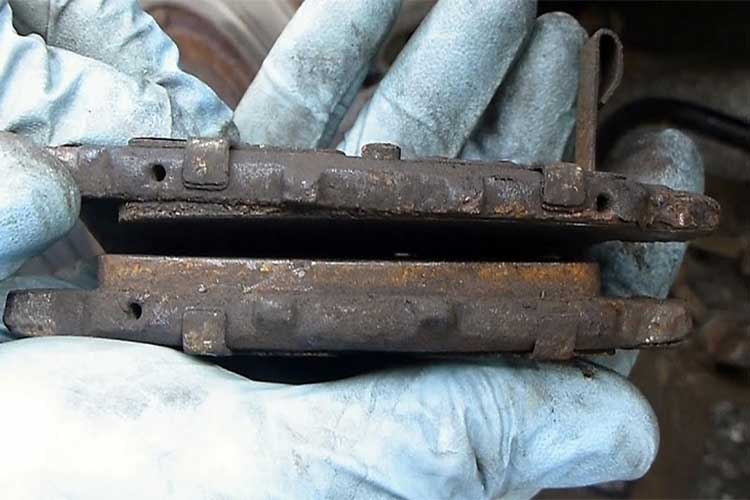
This can feel mild at first. A driver in a Honda CR-V might blame crown in the road. A Ram 1500 owner might blame tire pressure. Then the shop pulls the wheels and finds one inner pad worn almost to metal while the outer pad still has life. That pattern is a classic warning sign of uneven brake pad wear.
The counterintuitive part is that the worn side is not always the side that “brakes better.” A stuck slide pin can hold one pad in poor contact while the opposite pad does most of the work. The car may stop unevenly, but the wear pattern needs a close look before anyone names the failed part.
Why One Wheel Eats Pads Faster Than the Others
Once you know the symptoms, the next step is understanding the trap. A brake caliper has to clamp and release. Drivers think about the clamp because that is what stops the car. The release is where many wear problems begin.
Slide pins fail quietly before the pedal changes
Floating calipers move on slide pins. Those pins let the caliper center itself as the pads squeeze the rotor. When the pins dry out, rust, or bind, the caliper cannot shift as designed. Pressure lands unevenly, and one pad starts doing more work than the other.
This is where brake caliper sticking often starts without drama. No warning lamp. No huge noise. Maybe a faint squeak in a parking lot or extra dust on one wheel. On cars that sit outside through Northeast winters, the rubber pin boots can crack and let water in. Once grit and corrosion enter, fresh pads will not cure the root problem.
A non-obvious clue sits in the pad shape. Tapered wear, where one end of the pad is thinner than the other, can suggest binding hardware or poor pad movement in the bracket. That is not the same as normal pad life ending. It is a movement problem.
Hydraulic pressure can stay trapped after your foot is off the pedal
A caliper piston can also fail to return. Sometimes rust forms near the piston seal. Sometimes old brake fluid, heat, and moisture help internal corrosion grow. In other cases, the brake hose breaks down inside and acts like a one-way door. Fluid pressure reaches the caliper, but it does not release cleanly.
This is one reason brake caliper sticking can confuse a driveway diagnosis. The caliper may look fine from the outside. The hose may not leak. The wheel may spin after the car cools, then drag again after the next drive.
A U.S. shop may crack the bleeder screw during diagnosis. If the wheel frees up when pressure is released, the issue may be hydraulic instead of a simple mechanical bind. That matters. Replacing the caliper while leaving a bad hose in place can bring the same trouble back.
How to Check the Problem Without Guessing at Parts
A smart check starts with safety. Brake parts get hot enough to burn skin, and a dragging corner can overheat fast. You can collect clues, but lifting, removing wheels, and measuring pads should be done with proper tools or by a mechanic you trust.
The driveway clues are safe only when you stay hands-off
Start with what you can observe. After a normal drive, compare wheel smells from a safe distance. Look for one wheel with heavier brake dust. Notice whether the vehicle feels held back when coasting on a level road. Listen for a rub, chirp, or grind that changes when the brakes are applied.
The parking test can add one clue. On a flat, safe surface, the vehicle should roll without feeling chained down once it is in neutral and the parking brake is off. This is not a stunt. It is a gentle check. If the car resists movement or one wheel area smells hot, stop driving and schedule inspection.
The trap is assuming the loudest symptom is the true cause. A warped-feeling brake pulse can come after heat damage. The starting problem may have been a dragging brake pad days or weeks earlier. By the time the steering wheel shakes, the rotor may have joined the repair list.
A shop should prove the wheel, not sell the whole axle
A proper inspection should identify the corner, compare pad thickness, check rotor surface, inspect hardware, and test caliper movement. If the vehicle is safely raised, the technician can rotate each wheel and feel for drag. With the wheel off, the pad and bracket can tell the story.
Ask what failed before approving parts. Was the inner pad gone? Were the slide pins seized? Did the piston return slowly? Did opening the bleeder release the drag? Those answers separate a real repair from a parts swap.
For extra context, U.S. brake systems are regulated as complete safety systems, not as loose parts thrown together at random. The federal rule for light vehicle brake systems is dry reading, but the point is plain: braking balance matters. Your repair should restore that balance, not hide a fault behind new friction material.
Repair Choices That Stop the Wear From Coming Back
The best fix is the one that matches the failure. That sounds simple, yet many brake jobs go wrong because the old pads are thin and everyone stops thinking there. Pads are evidence. They are not always the cause.
When service is enough and when replacement wins
If slide pins are dry but not damaged, cleaning and proper brake lubricant may restore movement. If clips, shims, or pad ears are corroded, new hardware can let the pads move as they should. If the piston is seized, the caliper usually needs replacement or rebuilding by someone with the right tools.
A dragging brake pad that has overheated may glaze the pad surface and mark the rotor. Some rotors can be resurfaced if they remain above the maker’s minimum thickness. Others need replacement, especially if heat cracks, hard spots, or heavy runout are present.
One common mistake is replacing only the thinnest pad set. That may make the brakes quiet for a while, but it leaves the cause untouched. For readers comparing symptoms across repairs, brake noise diagnosis tips and uneven tire wear and brake pull clues are worth linking from the same maintenance cluster on your site.
Road salt, parking habits, and cheap parts decide the next failure
Prevention is not glamorous. It is clean hardware, sound boots, fresh fluid at proper intervals, and parts that fit without filing and forcing. In salt-belt states, a caliper bracket can rust enough to pinch pads in their tracks. In coastal areas, damp parking can do similar damage. In mountain towns, heat cycles punish weak parts.
A strange truth: cars that sit can suffer as much as cars that grind through city miles. A weekend vehicle parked outside in New Jersey may develop rusty rotor patches and stuck hardware faster than a daily driver that gets warmed, dried, and moved. Brakes like being used, but they hate being ignored.
When choosing parts, do not chase the cheapest line if you plan to keep the car. Poor-fitting hardware or bargain calipers can create noise, drag, or early wear. The repair should give the wheel its release back. That release is what keeps the new pads alive.
Conclusion
Brake drag rarely feels dramatic at first, and that is what makes it costly. A faint pull, one dusty wheel, or a hot smell after a routine drive can seem easy to postpone. Then one pad disappears, the rotor gets scarred, and the repair grows.
The real lesson is that uneven brake pad wear is not a normal personality trait of your vehicle. It is a message from one corner of the brake system. A sticking brake caliper may come from slide pins, a seized piston, trapped hydraulic pressure, or frozen hardware, but the pattern always asks for proof before parts.
Treat the symptom as a safety clue, not a shopping list. Compare wheels, listen to the car, and ask the shop to show the failed movement. The right fix protects the next set of pads, keeps braking straight, and gives you back trust every time your foot meets the pedal.
Frequently Asked Questions
What are the first signs of a caliper that will not release?
A hot smell from one wheel, extra brake dust, pulling to one side, poor coasting, or one pad wearing faster than the others can appear first. The brake pedal may still feel normal, so compare both sides instead of relying on pedal feel alone.
Can I drive with one brake pad wearing faster than the other?
You should avoid daily driving until it is checked. One fast-wearing pad can mean the brake is dragging or not clamping evenly. That can overheat the rotor, reduce stopping control, and turn a smaller repair into pads, rotors, hardware, and caliper work.
Why does one wheel smell hot after a normal trip?
Heat at one wheel often means friction is still happening after your foot leaves the pedal. A stuck piston, frozen slide pin, tight pad hardware, bad hose, or parking brake issue can keep pressure on the rotor and create that burnt smell.
How does a mechanic confirm brake drag?
A technician may lift the vehicle, spin each wheel, compare pad thickness, inspect the rotor, check slide pin movement, and test whether the piston returns. In some cases, loosening a bleeder screw helps show whether trapped hydraulic pressure is part of the fault.
Can a bad brake hose cause uneven pad wear?
Yes. An old hose can fail inside without leaking outside. When that happens, pressure may reach the caliper but release slowly. The pad keeps touching the rotor, heat builds, and one side can wear down faster than expected.
Should both calipers be replaced at the same time?
It depends on age, condition, and the failed part. Many shops prefer replacing calipers in axle pairs for balance, especially on older vehicles. If one caliper failed from local damage and the other side tests clean, your mechanic may recommend one side only.
Does road salt make calipers fail sooner?
Salt speeds up corrosion on brackets, slide pins, clips, pad ears, and exposed metal surfaces. Drivers in snowy states should pay close attention to brake drag signs after winter. A spring brake inspection can catch stuck hardware before summer heat adds more stress.
Can new pads fix uneven wear by themselves?
New pads may quiet the car for a short time, but they will not fix seized pins, a sticking piston, tight hardware, or trapped pressure. The old pad pattern should guide the repair. Fix the movement first, then install pads and rotors as needed.