A brake problem rarely announces itself like a blown tire or dead battery. It starts with a pulse under your foot, a tremble in the wheel, or a stop that feels less calm than it did last month. The first warped brake rotor clue is often that small change in feel, especially during highway braking or after a long downhill run.
That matters because rotors do not work alone. Pads, calipers, wheel bearings, tires, lug torque, and driving habits all shape what you feel through the pedal. A shaky stop may point to rotor runout, uneven pad material, heat spots, or a stuck caliper. Still, the warning deserves attention before it grows into longer stops, damaged pads, or a repair bill that spreads across the whole corner of the car.
For U.S. drivers who commute, tow, rideshare, or carry family every day, braking feel is not a comfort issue. It is control. A good inspection mindset, like the kind encouraged in practical vehicle maintenance guidance, helps you catch trouble while the car is still speaking softly.
Why Rotor Trouble Feels Bigger Than a Small Brake Issue
The strange part about rotor problems is how personal they feel. You are not reading a warning light. You are feeling a machine argue with your hands and feet. That is why many drivers delay service; the car still stops, so the shake gets treated like an annoyance. Bad move. A rough stop tells you the braking force is no longer arriving in a clean, even way.
Brake Pedal Vibration That Builds With Speed
Brake pedal vibration is one of the clearest early signs that the rotor surface is no longer meeting the pad evenly. It may feel like a soft thump, a fast flutter, or a rhythm that rises as road speed rises. At 25 mph, you may barely notice it. At 65 mph on an interstate exit ramp, it can feel like the pedal is pushing back.
That speed link matters. A tire balance problem can shake the car while cruising, but rotor-related pulsing usually shows up when you apply the brakes. A driver in Ohio might feel nothing on neighborhood streets, then feel a strong pulse when slowing off I-71 after traffic opens up. The brakes are under more load there, so the uneven contact becomes easier to feel.
The non-obvious part is that the rotor may not be bent like a potato chip. Many “warped” complaints come from thickness variation or pad material stuck unevenly on the rotor face. The result feels the same to your foot, but the cause may trace back to heat, poor break-in, or a caliper that is not releasing cleanly.
Steering Wheel Shake During Highway Stops
Steering wheel shake during braking often points toward the front brakes because the front axle handles much of the stopping load. The wheel may twitch side to side, buzz in your hands, or shake hard enough that your passenger notices. It is more than a comfort complaint. It means the front tires are being asked to slow through an uneven grip pattern.
This is where drivers sometimes chase the wrong repair. They buy tires, request an alignment, or blame the road. Those can matter, but a shake that appears mainly when braking deserves a brake inspection first. Our car shaking when braking guide can sit near this topic because the symptom overlaps with tires, suspension, and wheel bearings.
A small detail helps separate the clues. If the steering wheel shake happens while coasting, look beyond the brakes. If it arrives as your foot presses the pedal and fades when you lift off, the brake system moves higher on the suspect list. That one observation can save you from replacing good parts.
Warped Brake Rotor Warning Signs You Feel Before You See
By the time you can see heavy rotor scoring through the wheel, the car has often been sending softer warnings for weeks. The trick is learning which signals carry weight and which ones need context. Brakes live in heat, dust, rain, road salt, and stop-and-go abuse, so no single sign tells the whole story. A pattern does.
Pulsing at Low Speeds After Heat Soak
A pulse that appears after the brakes are hot can be easy to miss. You drive across town, stop at three lights, sit in a drive-thru, then feel the pedal throb during a slow roll into a parking space. Because the speed is low, the symptom feels harmless. It is not always harmless.
Heat soak can bring out uneven rotor wear that stayed hidden when the parts were cold. On a summer day in Phoenix or Dallas, a heavy SUV with passengers and cargo can build heat fast in local traffic. Add a long red light while your foot holds the pads against a hot rotor, and pad material can print onto one spot more than another.
Here is the counterintuitive part: gentle drivers can create this problem too. Riding the brake downhill or holding firm pedal pressure after a hard stop can bake a pad imprint into the rotor face. You did not abuse the car in a loud way. You created heat in a quiet way.
Noise, Odor, and Uneven Rotor Wear
Uneven rotor wear can bring noise, but the sound is not always the sharp squeal people expect. Sometimes it is a low scrape on the first few stops of the morning. Sometimes it is a faint ticking or rubbing that lines up with wheel speed. If the rotor face has high spots, grooves, or pad deposits, the pads do not glide across it with the same clean pressure each turn.
Odor adds another clue. A hot, bitter smell after normal driving may mean a brake is dragging. That can come from a sticking caliper, swollen brake hose, or seized slide pins. The rotor then overheats because the pad never backs away enough. A fresh rotor will not stay fresh if the part squeezing it is still hanging up.
Look at one front wheel after a normal drive, without touching hot parts. Heavy brake dust on one side, a burned smell, or a wheel that radiates more heat than the others can suggest a single-corner issue. That matters because replacing both front rotors without fixing the stuck side may only buy you a short break.
What Causes the Rotor Face to Lose Its Bite
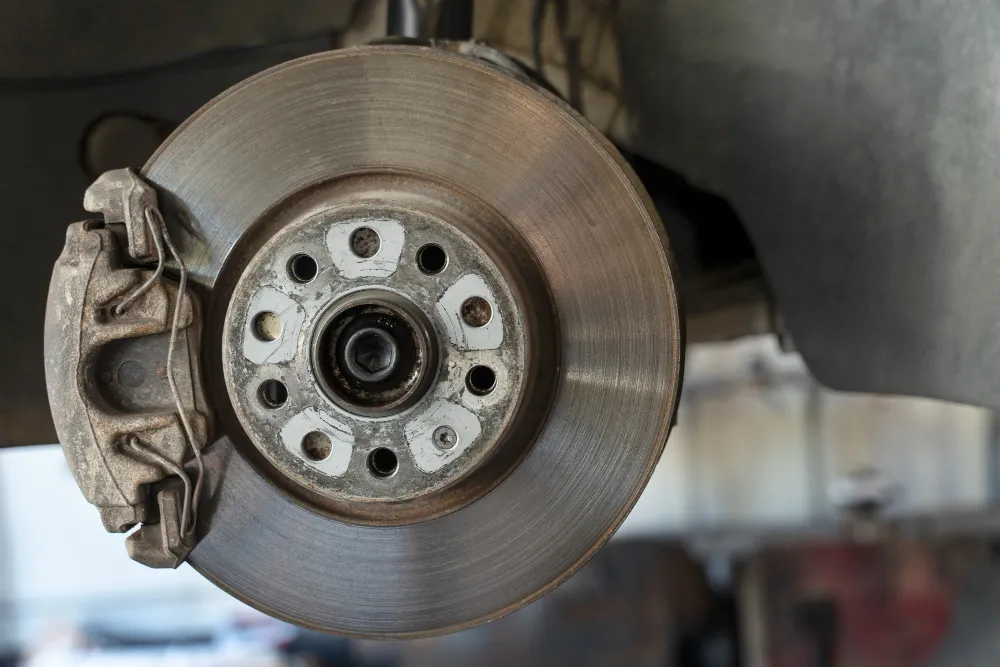
Rotor trouble is often blamed on one hard stop, but the real story is usually slower. Heat cycles, pad choice, rust, wheel installation, and driving load all leave marks. The rotor is a heat sink. It takes motion and turns it into heat. When that heat is uneven, the surface starts telling on the rest of the system.
Heat, Pad Deposits, and Stop-and-Go Driving
City driving can punish brakes more than open-road driving because the rotors never get a calm rhythm. A nurse leaving a night shift in Atlanta traffic may brake hard, crawl 200 feet, brake again, and sit with the pedal pressed. That cycle keeps feeding heat into the same parts with little airflow to cool them.
Pad deposits are often misunderstood. Brake pads are designed to leave a thin transfer layer on the rotor. When that layer is even, braking feels smooth. When it becomes patchy, the pad grabs harder in some spots than others, and brake pedal vibration can follow. The driver feels a warped disc, but the surface chemistry may be the troublemaker.
Towing sharpens the issue. A half-ton pickup pulling a small camper through the Smokies can overheat marginal brakes if the driver rides the pedal instead of downshifting. Bigger rotors help, but technique still matters. Give the brakes firm, shorter applications when safe, then let air do some cooling between them.
Bad Lug Torque and Cheap Brake Work
Poor wheel installation can create brake problems after the repair is “done.” Lug nuts tightened unevenly can distort the way the rotor sits against the hub. Dirt or rust between the rotor and hub can do the same thing. The rotor may be new, yet it wobbles because it was mounted on a bad foundation.
This is why a torque wrench matters. An impact gun can be fast, but speed is not accuracy. A shop that cleans the hub face, checks rotor runout, tightens lugs in the correct pattern, and follows the vehicle torque spec is protecting the brake job from coming back angry.
Cheap brake work can also skip bedding. New pads and rotors need a proper break-in process so the transfer layer forms evenly. No dramatic stops. No sitting with the pedal clamped after a heat-building stop. Those first miles shape how the parts will feel later. That small ritual feels fussy until it prevents a comeback vibration.
When to Keep Driving, Slow Down, or Book Service
The hard question is not whether a brake shake matters. It does. The better question is how urgent it is. Some symptoms call for a planned inspection within days. Others call for changing your route, reducing speed, or parking the car until it is checked. You do not need panic. You need judgment.
What You Can Check in the Driveway
Start with what you can observe without taking risks. Is the brake warning light on? Is fluid low? Does the pedal sink, feel soft, or need more travel than usual? Those signs move the issue beyond a simple rotor complaint. They deserve fast attention because hydraulic problems can reduce stopping power.
Next, compare patterns. Does the shake happen only when braking? Does it grow at highway speed? Does the car pull left or right? Does one wheel smell hot after a short trip? Write those details down before calling a shop. A good technician can use that story to decide whether to inspect rotors, pads, calipers, hoses, suspension, or tires first.
You can also check for open safety recalls through the official NHTSA recall lookup. Most rotor wear problems are maintenance issues, not recalls, but it is still smart to rule out known brake system campaigns on your exact vehicle. Use the VIN, not a guess based on model year.
Repair Choices: Resurface, Replace, or Recheck the System
Resurfacing can work when the rotor is thick enough, the damage is mild, and the vehicle maker allows machining. The shop removes a thin layer to restore a flat friction surface. That sounds simple, but thinner rotors hold less heat. If they are already near minimum thickness, replacement is the safer call.
Replacement is often the better value on many daily drivers because labor can cost more than the parts difference. Pads should be judged at the same time. Installing new pads on a damaged rotor can ruin the pads. Installing new rotors with old, uneven pads can mark the rotors. Brake parts wear as a team.
The final check is the one many rushed repairs miss. Ask why the rotor went bad. If the answer is heat from a sticking caliper, rusty slides, an over-tightened wheel, or a towing habit, the repair needs to address that cause. Otherwise, you will be back with the same shake before the next oil change. A related brake pad warning signs page can help readers connect pad wear with rotor symptoms before they approve repairs.
Conclusion
A shaky stop is easy to excuse when the car still gets you home. That is the trap. Brake problems often grow in small steps, and the early signals are felt more than seen. A pulse in the pedal, a wheel that trembles, a hot smell near one corner, or uneven rotor wear should make you slow down and pay attention.
The phrase warped brake rotor may sound like a single failed part, but the smarter view is broader. The rotor is reporting on heat, friction, installation quality, and the way the whole corner of the car is working. Treat the symptom as a message, not a mystery.
Book an inspection before the shake becomes normal in your mind. Good brakes should feel boring, steady, and predictable. When they stop feeling that way, take the warning seriously and get the car checked before your next hard stop makes the decision for you.
Frequently Asked Questions
How do I know if my rotors are causing brake pedal pulsation?
A pulse that appears mainly while braking, gets stronger with speed, and fades when you release the pedal often points toward rotor or pad surface trouble. A technician can confirm it by measuring rotor runout, checking thickness variation, and inspecting pad contact.
Can I drive with rotors that shake when braking?
Light shaking may allow a short drive to a repair shop, but hard vibration, pulling, burning smell, fluid loss, or a soft pedal should be treated as unsafe. Keep speeds low, leave extra distance, and avoid highway driving until the brakes are checked.
Why does my steering wheel shake only when I brake?
Front brake issues often travel through the steering wheel because the front wheels carry much of the stopping load. Rotor runout, uneven pad transfer, worn front pads, or loose suspension parts can all create that shake during braking.
Are warped rotors always caused by hard braking?
No. Heat matters, but uneven lug torque, dirty hub surfaces, stuck calipers, poor pad break-in, and holding the pedal after a hot stop can also create rotor vibration. Calm drivers can still develop the problem through repeated heat and poor cooling.
Is resurfacing rotors better than replacing them?
Resurfacing can be fine when the rotor has enough thickness left and only mild surface issues. Replacement is smarter when the rotor is thin, cracked, deeply grooved, heat-spotted, or when machining would leave too little material for safe heat control.
Can bad brake pads feel like rotor problems?
Yes. Uneven, glazed, contaminated, or poorly bedded pads can create pulsing, noise, and weak bite that feels like rotor damage. That is why pads and rotors should be inspected together instead of blaming one part from the driver’s seat.
What does a dragging brake smell like?
A dragging brake often smells hot, sharp, or bitter, like overheated metal and friction material. One wheel may seem hotter than the others after normal driving. Do not touch the wheel or rotor; let a shop check for a stuck caliper or hose issue.
How can I prevent rotor vibration after a brake job?
Ask the shop to clean the hub face, torque the wheels to spec, inspect caliper slides, and bed the pads correctly. After the job, avoid hard stops for the first miles unless safety demands it, and do not hold heavy pedal pressure after heat-building stops.