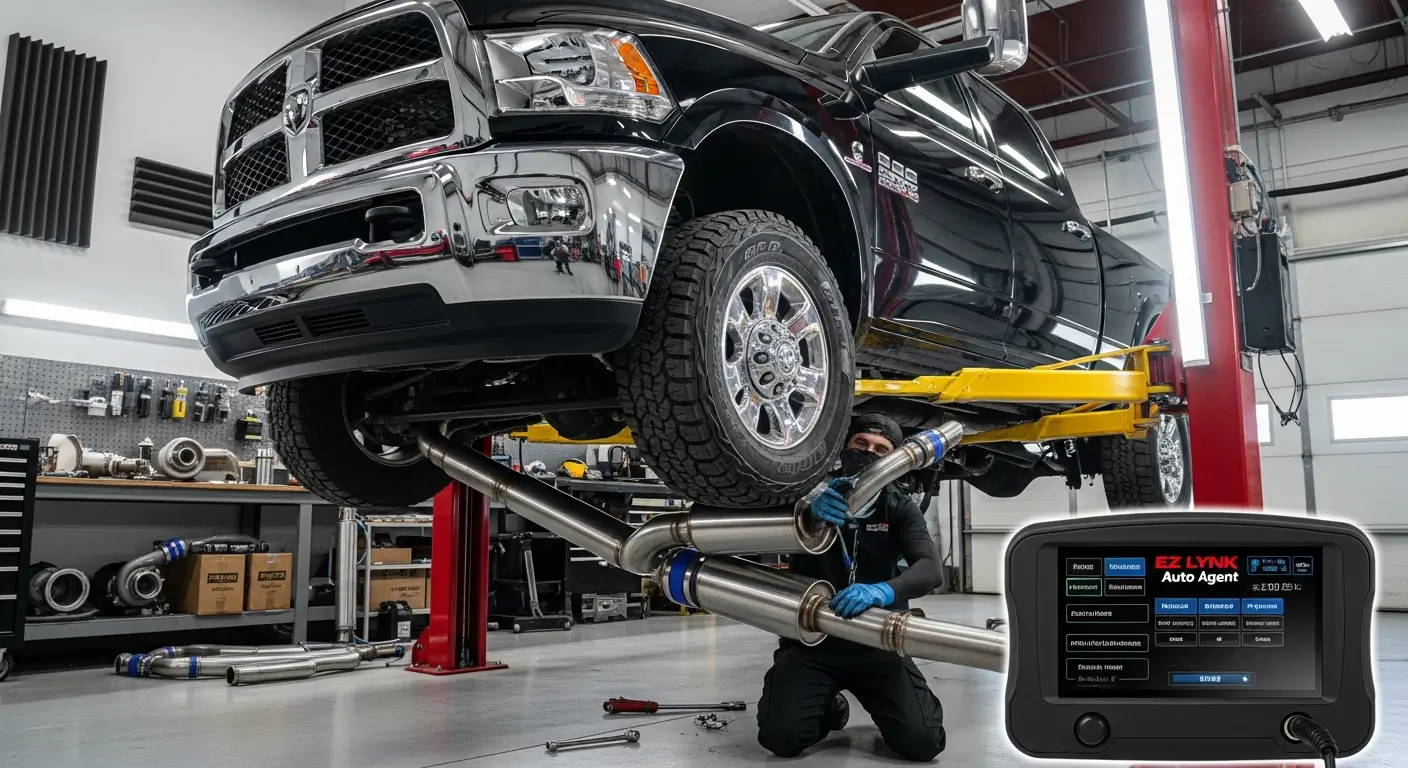
A heavy-duty pickup does not feel heavy-duty when it is counting down miles on the dash. Diesel Exhaust Fluid warnings on a Ram 2500 can start as a small message, then turn into an engine derate warning that changes your whole day. For many U.S. owners, that means a work trailer parked at a jobsite, a fifth-wheel trip cut short, or a farm errand stalled miles from the dealer. The core problem is not always empty fluid. It can be a DEF system fault caused by a bad sensor, weak pump, frozen line, poor dosing, wiring trouble, or software logic that does not trust what it sees. That is why diesel pickup repair stories often sound the same: the truck runs fine, yet the dash says it will not keep doing so for long. The smart move is to treat the warning as a timed diagnosis, not a mystery. You need to know what the SCR system wants, what usually fails on the 6.7L Cummins setup, and when to stop guessing before one wrong part turns an annoying warning into an expensive stall.
Why Diesel Exhaust Fluid Faults Put a Ram 2500 Into Derate
Modern Ram diesel trucks do not treat emissions faults like loose trim or a weak door latch. The DEF side belongs to the aftertreatment chain, and the truck is built to protect that chain because federal emissions rules depend on it. The odd part is that the engine may feel healthy while the warning climbs. You press the throttle, the Cummins pulls, and the truck sounds normal. Then the cluster says a speed limit or no-start condition may be coming. That mismatch is what makes owners angry. The engine is not always broken. The truck is refusing to keep working without proof that the exhaust cleanup system is doing its job. EPA has addressed sudden DEF-related derates through guidance for manufacturers, which is worth reading if you want the regulatory backdrop rather than forum noise: EPA guidance on DEF systems.
The countdown is a warning, not the repair
The countdown message is not a diagnosis by itself. It is the truck’s way of saying the SCR system has crossed a line and has not corrected itself. The actual cause may sit in the tank, under the truck, near the exhaust, or inside a control module. A Ram 2500 can show a service message because pressure is low, the tank level signal looks wrong, the fluid heater circuit fails, the injector does not dose well, or the NOx sensors report numbers that do not match what the computer expects.
A non-obvious truth: the derate can be doing exactly what it was programmed to do while still being unfair to the owner. That sounds like double talk, but it is not. The software may respond correctly to bad data. The bad data may come from a failed sensor instead of dirty exhaust. So the truck acts as if the system is not treating emissions, even when the root problem is a small electrical part.
Think of a contractor in Kansas hauling a skid steer on a cold morning. The truck starts, warms up, and pulls out fine. Thirty minutes later, the warning appears. The driver tops off the DEF at a truck stop, but the message stays. That fill-up did not fail; it answered the wrong question. If the tank level sensor, pump module, or heater circuit is lying, more fluid will not make the computer believe the system is healthy.
Why good fluid can still trigger a bad warning
Fresh DEF matters, but it is not a magic cure. The fluid can be clean and still get blamed because the truck cannot confirm flow, quality, pressure, or treatment results. That is where many owners lose money. They drain the tank, buy name-brand fluid, clear the code, and hope. Hope is not a test plan.
DEF is sensitive to dirt, age, heat, and storage mistakes. A half-used jug that sat open in a garage all summer is a risk. So is fluid poured through a dirty funnel that once touched coolant or diesel. Still, a Ram can flag a DEF system fault when the fluid itself is fine. The pump may not build enough pressure. The injector may be crusted. A harness may have rubbed through near a bracket. A NOx sensor may report weak conversion and make the truck suspect poor dosing.
The better habit is simple: separate fluid quality from system function. Test or replace fluid when there is a reason, but do not let the jug become the villain for every warning. On these trucks, the Cummins emissions system is a chain. A clean tank does not fix a weak link farther downstream.
Common Ram 2500 DEF Failures Owners Should Check First
Once the message appears, owners tend to jump to the most expensive part in the story. That is usually the wrong place to begin. A Ram 2500’s aftertreatment setup has several pieces that can make the dash sound dramatic. Some failures are mechanical. Some are electrical. Some are boring connection issues that show up after rain, road salt, heat, vibration, or previous repair work. The best diagnosis starts with pattern recognition, then confirms it with scan data. The tension here is time. The truck may still drive, but the engine derate warning makes every mile feel borrowed. Good troubleshooting turns that pressure into a plan.
Pump, heater, and tank module problems
The pump module is a common suspect because it works in a harsh little world. It sits with fluid, deals with temperature changes, and has to push the right amount at the right time. If it cannot build pressure, the system may think dosing has stopped. If the heater side fails in winter, the truck may not thaw the fluid as expected. If the level signal does not make sense, the cluster may show a warning even after you added fluid.
Cold states expose these faults faster. A Ram owner in Minnesota may see the warning after a freeze-thaw swing, while a Texas owner may have more trouble from heat-aged fluid or dusty service conditions. Same system, different stress. That is why a code list without context can mislead you.
The counterintuitive part is that a full tank can hide the failure in plain sight. Drivers assume full means fixed. A stuck or inaccurate level reading can keep telling the module a different story. On some older trucks, service bulletins and warranty extensions have mattered, so a VIN check with a Ram dealer can be worth more than another parts-store scan. It is not glamorous work. It can save a lot of money.
Injector, line, and wiring faults that fool the truck
The DEF injector lives near heat and exhaust deposits. It can clog, leak, or spray poorly. When dosing is uneven, the SCR catalyst may not get the right chemical reaction, and downstream readings can fall out of range. The truck may then treat the issue like a larger failure. A small dosing problem can become a big drivability problem because the computer only sees the result.
Lines and connectors deserve the same respect. DEF lines can be damaged by road debris, poor routing after another repair, or frozen fluid that stresses a weak section. Wiring can chafe where it crosses brackets. A connector that looks clean from the outside may hold corrosion where pins meet. This is common on work trucks that see mud, salt, gravel roads, and pressure washing.
Here is the quiet detail many owners miss: a DEF system fault after unrelated service may not be coincidence. A shop may replace a transmission pan, exhaust clamp, driveshaft part, or fuel filter and disturb a harness nearby. Nobody meant to break anything. The truck only knows that a signal changed. When a warning appears after service, inspect the work area before blaming the tank.
For readers building a repair plan, bookmark your own diesel emissions troubleshooting checklist and keep notes by date, mileage, codes, and weather. A truck that repeats the same pattern is trying to tell you something.
Diagnosing the Warning Before You Replace Parts
Diagnosis is where Ram owners either regain control or start feeding the parts cannon. A basic code reader may show a generic emissions code, but that rarely gives the whole story. You want freeze-frame data, active faults, pending faults, DEF level reading, pump command, pressure values, temperature readings, and NOx sensor behavior when available. This is where a diesel-capable scan tool or a skilled shop earns its keep. The goal is not to clear the light. The goal is to learn why the truck turned it on. Clearing codes before saving them is like throwing away the note before reading it.
Read the code before clearing the message
Start with the exact message on the cluster and the exact diagnostic trouble codes. Write them down. Take a photo. A code that returns right away tells a different story than one that returns after a drive cycle. A hard electrical fault may come back within seconds. A dosing or efficiency fault may need heat, speed, and time before the computer sees it again.
Look for families of codes, not isolated drama. A heater code in freezing weather points one way. Low pressure points another. A quality or tamper message points somewhere else. NOx sensor codes can be the cause, the witness, or the messenger. That last part matters. Replacing a NOx sensor because it reported bad readings may fix nothing if the injector never sprayed enough fluid.
A strong shop will not only say “it needs a tank.” It will explain what test failed. Did the pump fail a commanded pressure test? Did the level reading stay fixed? Did the heater circuit show open resistance? Did the injector pass an inspection? If the answer is vague, slow down. Expensive guesses feel fast until the warning returns.
How weather, storage, and short trips change the diagnosis
DEF freezes around normal winter temperatures, but trucks are designed with heaters and thaw logic. Freezing alone is not the enemy. Failed thawing is. That is why a cold morning warning does not always mean the fluid is ruined. It may mean the heater circuit, temperature sensor, line heater, or module logic did not respond as expected.
Short trips add another wrinkle. The SCR catalyst needs proper operating conditions to prove that dosing is working. A truck that spends its life idling, making ten-minute trips, or towing only once a month may not give the system the same clean proof as a truck pulling steady highway miles. The Cummins emissions system likes heat, flow, and stable operation. City errands are not its favorite diet.
Storage matters too. A Ram 2500 that sits for weeks with an aging half tank may build crystals around the cap area or injector tip. A ranch truck parked in a dusty shed has a different risk than a commuter truck in a paved driveway. Neither owner is wrong. Their trucks live different lives.
The non-obvious insight is that the best “repair” after certain service work may be a proper drive cycle, not another part. Once the real fault is fixed, the truck may need time and conditions to confirm the system is back in range. A shop that understands this will road-test, monitor data, and avoid handing you a truck with a warning waiting to return.
Repair Choices That Keep the Truck Legal and Useful
The worst repair advice in this space is the loudest: delete it, bypass it, trick it, or ignore it. That may sound tempting when your truck is threatening a derate, but it creates inspection, resale, warranty, and legal trouble. It can also make the truck harder to sell to a normal buyer. The better path is less dramatic: confirm the fault, fix the failed part, update software when available, and keep records. Boring wins here. A Ram 2500 is too valuable to turn into a rolling headache because one warning made you mad.
When a dealer visit is the safer path
A dealer is not always the cheapest route, but it can be the right one when software, warranty coverage, campaigns, or VIN-specific service information may apply. Ram diesel trucks have changed across model years, and not every module, tank, sensor, or software fix applies to every pickup. A 2015 truck and a 2023 truck may show similar warnings while needing different answers.
Ask direct questions. Is there an open recall, campaign, or warranty extension tied to my VIN? Is the module software current? Are the codes active or stored? Which test proves the failed part? Can I see the printout? A good service writer will not fear those questions. A rushed answer like “these all need tanks” should make you pause.
There is another reason to involve a dealer or diesel specialist: documentation. If a repeated DEF system fault turns into a warranty dispute, lemon-law conversation, or used-truck sale concern, clean records help. Dates, mileage, codes, parts, and test results tell a better story than memory. For a work truck, records can also show downtime patterns that matter to your business.
What owners can do between service appointments
You still have control before the appointment. Use fresh DEF from a sealed container or a busy pump location. Keep the cap and fill area clean. Do not top off with random leftovers from an old jug. Avoid spilling into the wrong fill neck. Check for obvious leaks, hanging wires, damaged lines, or white crystal buildup near the injector and fittings. None of this replaces diagnosis, but it prevents easy mistakes.
Do not keep driving deep into a countdown because the truck “feels fine.” That is how a manageable repair becomes a tow. If you tow heavy, travel rural routes, or work far from town, treat an engine derate warning as a schedule problem as much as a mechanical one. Plan the repair before the truck plans your speed for you.
A simple owner log helps more than most people expect. Note fuel stops, DEF fill dates, warning messages, temperatures, towing loads, and repair visits. Patterns show up. A warning after cold nights points one way. A warning after every long tow points another. A warning after a pressure wash points somewhere else.
For a deeper ownership file, pair that log with a Ram diesel maintenance record template. You do not need fancy software. You need a clean timeline that a technician can trust.
Conclusion
A derate warning on a Ram 2500 feels personal because it attacks the reason you bought the truck: power on demand. Still, panic repairs rarely age well. Diesel Exhaust Fluid trouble needs a calm process: verify fluid condition, read the codes, inspect the tank module, check dosing hardware, look at wiring, and confirm software or campaign options by VIN. The owner who wins is not the one who buys the most parts. It is the one who separates a true emissions failure from a sensor, heater, pump, wiring, or logic problem. Keep the truck legal, keep the paperwork, and resist shortcuts that create larger trouble later. A heavy-duty diesel can work hard for years when its aftertreatment system is treated like part of the truck, not an enemy bolted underneath. When the dash starts counting down, answer with evidence, not guesswork.
Frequently Asked Questions
What does a service DEF message mean on a Ram 2500?
It means the truck detected a problem in the DEF or SCR aftertreatment system. The cause may be low fluid, poor fluid quality, pump trouble, heater failure, injector clogging, wiring damage, or sensor data that does not match expected emissions performance.
Can I keep driving with an engine derate warning?
You may have limited miles or time before speed is reduced, but ignoring it is risky. The truck can move from a warning into a speed limit or no-start condition. Save the codes and schedule diagnosis before the countdown gets tight.
Will adding DEF clear the warning?
It may clear a low-level warning if the tank was low and the level sensor reads correctly. It will not fix a failed pump, heater, injector, NOx sensor, wiring fault, or stuck level reading. If the warning stays, stop treating fluid level as the only issue.
Why does my Ram say DEF is low after I filled it?
The level reading may be delayed, stuck, or incorrect. A failed tank module, sensor issue, wiring fault, or cluster data problem can make the truck report the wrong level. Give it a short key cycle, then scan it if the message remains.
Is poor DEF quality always caused by bad fluid?
No. The truck may accuse the fluid when the real problem is dosing pressure, injector spray, NOx sensor readings, or SCR performance. Old or contaminated fluid can cause trouble, but clean fluid cannot overcome a failed part elsewhere in the system.
How much does a DEF repair cost on a Ram 2500?
Cost depends on the failed part, model year, warranty status, and labor rate in your area. A sensor or wiring repair may be modest, while a tank module or pump assembly can cost far more. Always check VIN coverage before approving major repairs.
Can cold weather cause DEF system problems?
Cold weather can expose weak heaters, frozen lines, poor connections, and aging fluid. DEF freezing by itself is expected, so the real question is whether the truck can thaw and dose it correctly. Repeated winter warnings need scan data, not guesswork.
Should I delete the DEF system to avoid derate issues?
No. Deleting emissions equipment can create legal, inspection, resale, warranty, and repair problems. A proper diagnosis keeps the truck compliant and usable. Fix the failed part, check for software updates, and keep records instead of creating a bigger ownership risk.